

Robinhood Chain has quickly attracted attention from DeFi users, real-world asset traders and memecoin speculators. The network combines Ethereum-compatible infrastructure with Robinhood’s growing onchain ecosystem, creating new opportunities for users who want to explore decentralized applications and tokenized markets.

This guide explains how to get started on Robinhood Chain, from creating an EVM wallet and bridging ETH to researching protocols and trading tokens through platforms such as GMGN, DEX Screener and Uniswap.
What Is Robinhood Chain?
Robinhood Chain is a permissionless, Ethereum-compatible Layer 2 blockchain designed to connect crypto, traditional markets and tokenized real-world assets.
Because the network is compatible with the Ethereum Virtual Machine, users can connect through EVM wallets and interact with decentralized applications in a familiar way. Developers can also deploy smart contracts using standard Ethereum tooling.
Robinhood Chain uses ETH to pay network fees. Every swap, bridge transaction, token approval and DeFi interaction requires a small amount of ETH for gas.
It is also important to understand that Robinhood Chain operates independently from regular Robinhood brokerage and crypto accounts. Funds held in the Robinhood app do not automatically appear in a self-custodial wallet on Robinhood Chain.
Create an EVM Wallet
The first requirement is an EVM-compatible wallet. Rabby Wallet is one of the available options because it supports multiple Ethereum-compatible networks and provides transaction previews that can help users understand what they are signing.
Download the extension only through the official Rabby website. Fake wallet extensions and sponsored advertisements can be used to steal recovery phrases and private keys.

When creating the wallet, Rabby will generate a recovery phrase, normally containing 12 words. This phrase provides complete access to the wallet and every asset stored through it.
Write the words down and store them offline in a secure location. Avoid saving the phrase in screenshots, cloud storage, email, messaging applications or any device permanently connected to the internet.
Once the wallet is created, it will provide a public EVM address. This is the address that can be used to receive funds.
How to Deposit Funds on Robinhood Chain
There are two main ways to fund a wallet on Robinhood Chain: withdrawing directly from a centralized exchange or bridging assets from another blockchain.
If an exchange supports Robinhood Chain withdrawals, select the correct asset and network before confirming the transaction. The fact that an exchange supports ETH does not necessarily mean that it supports withdrawals through Robinhood Chain.
Confirm the destination address, withdrawal network, asset, fee and minimum amount. Sending a small test transaction before moving a larger balance can reduce the consequences of choosing the wrong network or address.
If direct withdrawals are unavailable, users can withdraw funds to a supported EVM network such as Ethereum, Base or Arbitrum and then use a bridge to move them to Robinhood Chain.
Why You Should Bridge ETH First
ETH is the most practical asset for a first deposit because it is used to pay gas fees on Robinhood Chain.
A common beginner mistake is bridging only USDC or another ERC-20 token. The funds may arrive correctly, but the user may be unable to swap or transfer them because the wallet has no ETH to pay for the next transaction.
Receiving native ETH prevents this problem. Part of the balance can be reserved for fees, while the remaining amount can be used for swaps or DeFi interactions.
Users should also avoid spending their entire ETH balance. Selling a token, removing liquidity, revoking an approval or bridging funds back will require additional gas.
How to Bridge ETH with Jumper
Jumper is a bridge aggregator that compares different cross-chain routes. Instead of forcing users to choose a single bridge, it can display available options based on estimated output, speed and cost.
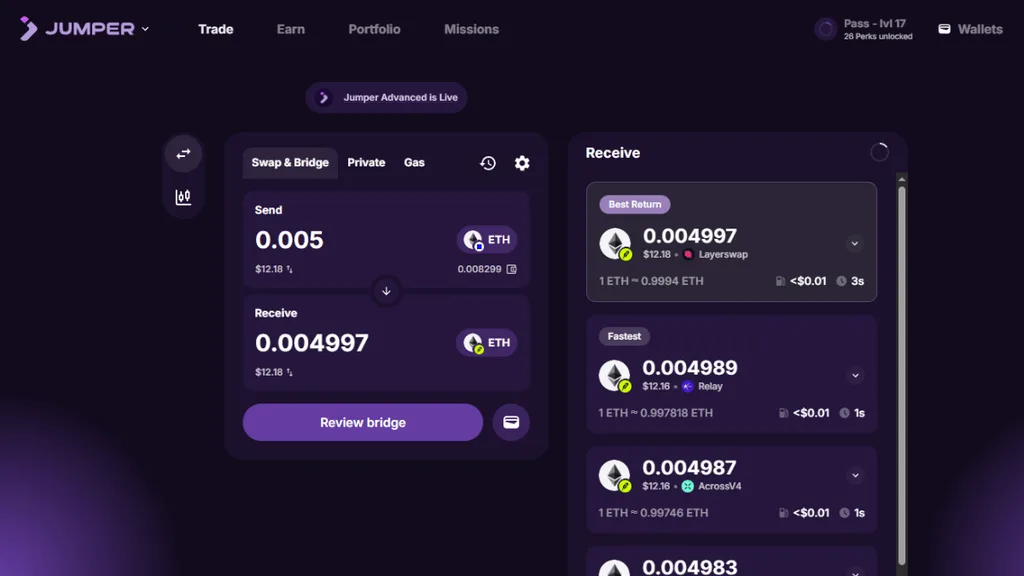
To move ETH to Robinhood Chain:
- Connect the EVM wallet to Jumper.
- Select the network where the funds are currently located.
- Choose ETH or another supported input asset.
- Select Robinhood Chain as the destination network.
- Choose native ETH as the destination asset.
- Enter the amount to transfer.
- Compare the available routes and estimated fees.
- Review the transaction and confirm it in the wallet.
The fastest route is not always the cheapest. Review which bridge is being used, whether the route includes additional swaps and every wallet request before signing. After completion, verify that the ETH appears specifically on Robinhood Chain.
Finding DeFi Protocols on Robinhood Chain
Once the wallet has ETH, the next step is researching applications available on the network.
DefiLlama provides an overview of Robinhood Chain, including total value locked, decentralized exchange volume, stablecoin liquidity and a directory of protocols divided by category.
TVL, or Total Value Locked, represents the value deposited into a protocol according to the platform’s methodology. It can help identify applications that have attracted more capital, but it should never be treated as proof that a protocol is safe.

A protocol with low TVL may have limited adoption or shallow liquidity. A protocol with high TVL can still experience smart contract exploits, oracle failures or problems involving individual markets. Established multichain protocols may have longer histories, but users must still verify the Robinhood Chain deployment.
Morpho is one example of an established lending protocol available in the ecosystem. Before depositing into any Morpho market or vault, users should still research the supplied asset, collateral, curator, oracle, interest model and withdrawal conditions.
The safest approach is to use DefiLlama as a research starting point and then confirm every website, contract and social profile through the project’s official channels.
Exploring Robinhood Chain Memecoins with GMGN
Robinhood Chain has also attracted a rapidly growing memecoin market. Platforms such as Pons and other launchpads allow new tokens to appear continuously, creating an environment where prices can change dramatically within seconds.
GMGN is a memecoin trading terminal that provides token charts, holder information, trading activity and tools for executing onchain orders. When Robinhood Chain is available in the network selector, users can explore new launches and trending markets across the ecosystem.
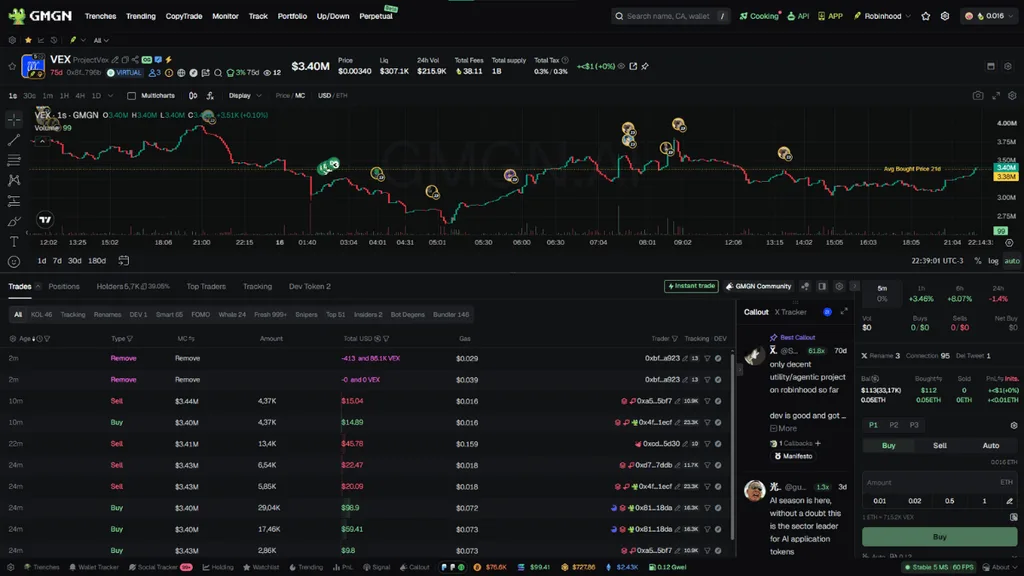
New-token feeds are sometimes referred to as the “trenches.” This stage is dominated by speed and automation: bots can trade within fractions of a second, while manual users may enter after early wallets have already accumulated positions.
To trade through GMGN, users connect a wallet, select the token, enter the amount of ETH and confirm the order. Automated security indicators should only be treated as references; they cannot guarantee that a token is legitimate or that liquidity will remain available.
Researching Tokens with DEX Screener
DEX Screener can be used to monitor Robinhood Chain trading pairs and compare metrics such as price, liquidity, volume, transaction count and market capitalization.
The trending sections can identify where attention is moving, but they are not lists of safe investments. Aggressive speculation, promotion, bot activity or temporary volume can push tokens into these rankings.
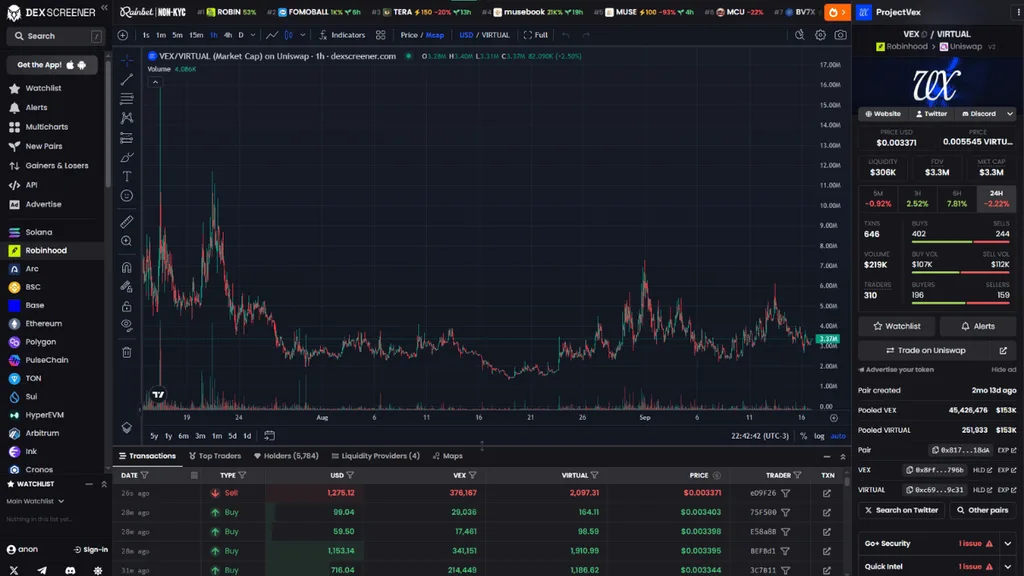
Before buying, check:
- The exact contract address.
- The age of the trading pair.
- Available liquidity.
- Buy and sell activity.
- Holder concentration.
- The developer’s wallet activity.
- Whether the token can actually be sold.
Market capitalization does not represent the amount of money available in the pool. A token may display a valuation of $1 million while having only a small amount of real liquidity.
If a holder attempts to sell a position that is large relative to the pool, the trade can create severe price impact. In extreme cases, the amount received may be much lower than the value displayed in the wallet.
How to Buy a Token Through Uniswap
Uniswap is one of the main decentralized exchanges available on Robinhood Chain. It can be used to swap ETH for Stock Tokens, crypto assets and compatible ecosystem tokens.
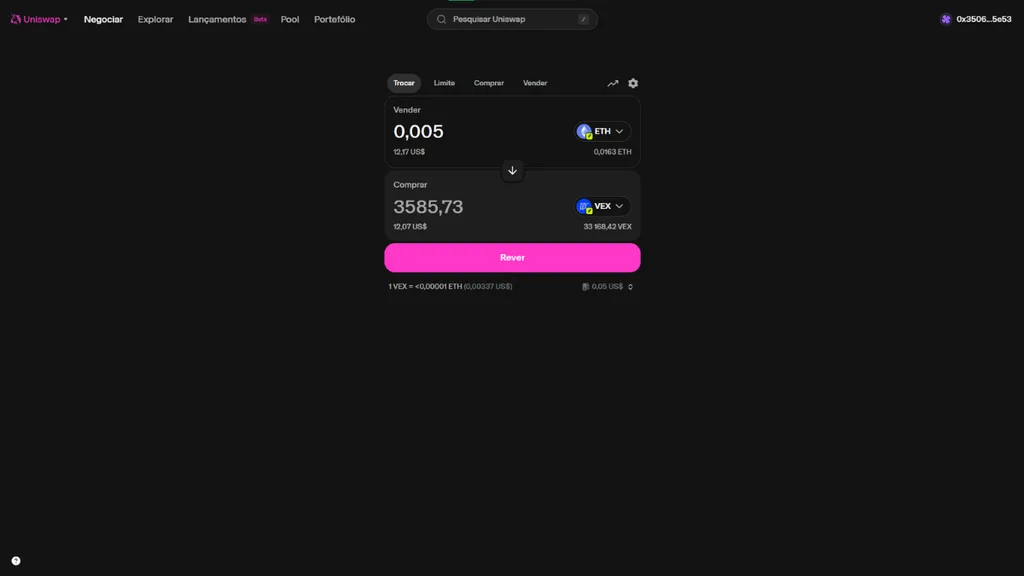
To buy a token:
- Copy its verified contract address.
- Open the Uniswap interface.
- Connect the wallet and select Robinhood Chain.
- Choose ETH as the input asset.
- Paste the token contract into the output-token search field.
- Confirm that the displayed contract matches the intended asset.
- Enter the amount of ETH to swap.
- Review the price impact, minimum received and network fee.
- Confirm the transaction in the wallet.
Using a contract address is safer than searching by name because different tokens can use identical tickers. Even so, the correct address does not guarantee that the project is trustworthy. Increasing slippage or ignoring a Uniswap warning can produce a much worse execution than expected.
Why Newly Launched Memecoins Are So Dangerous
Memecoins can generate extraordinary returns for early participants, but the same market structure can create devastating losses for users who arrive later.
A developer may control a large portion of the supply, related wallets can coordinate sales and bots may inflate the initial activity. Liquidity can also be too shallow to support large exits.
Another common risk is the rug pull, which can involve removing liquidity, selling a hidden allocation or abandoning the project. Even tokens associated with public figures can lose nearly all their value. A well-known name does not guarantee genuine involvement or sufficient exit liquidity.
Before buying any newly launched token, users should assume that losing the entire position is possible.
Start Small and Avoid FOMO
Robinhood Chain offers much more than memecoin speculation. Users can explore decentralized exchanges, lending protocols, tokenized assets and other applications without immediately entering the highest-risk markets.
The best first transaction is often a small bridge followed by a low-value swap. This allows the user to understand how network selection, gas fees, approvals and transaction confirmations work before committing more capital.
Never allocate money simply because a token is trending or other traders are posting profits. Robinhood Chain may continue to grow, but using it responsibly requires verifying contracts, maintaining enough ETH for gas and understanding the exit before entering a trade.
For speculative memecoins, use only capital that you are prepared to lose completely. Avoid FOMO, start with small transactions and prioritize learning how the network works before attempting to chase its most volatile opportunities.
This article is for educational purposes only and does not constitute financial advice.
